

Food preparation
Food preparation in commercial kitchens is all about delivering consistency, efficiency, and quality at scale. From careful ingredient handling and preparation to strict hygiene standards and streamlined workflows, every stage is designed to ensure smooth service and outstanding results in fast-paced environments.
How this equipment improves workflow
The most effective improvements are often the simplest, to reduce unnecessary steps, cut waiting times, and eliminate workarounds. When equipment is specified to reflect how the kitchen actually operates, staff can focus less on compensating for inefficiencies and more on delivering consistent, high-quality results.
Peak Demand
Our team thinks about what happens in the busiest 15 minutes, not an average day
Environment
Our team considers everything, including site access, loading and unloading, service clearings and cleaning.
Services
We will consider what equipment will work best for you. We assess at power, water quality, heat output, noise, ventilation requirements.
Workflow
We review your existing equipment and setup in detail to ensure any new additions integrate seamlessly. Guaranteeing full compatibility, smooth installation, and consistent performance across all systems, so everything works efficiently together from day one.
Common mistakes we help you avoid
- Choosing domestic-grade equipment because it is cheaper is not always the best long-term solution. We will always recommend heavy-duty equipment designed specifically for commercial environments, as domestic-grade equipment is not built to withstand the demands of a commercial kitchen.
-
Using equipment incorrectly can lead to accidents, poor hygiene, and equipment damage. We provide on-site training and ensure you have the necessary user manuals following installation to support safe and correct operation. We understand hygiene is the top priority in a kitchen. That’s why we provide cleaning services and maintenance as ease of cleaning is just as important as performance. Click here to see what we offer.
FAQs
This depends on your volume of prep, the type of food being prepared and how frequently the equipment will be used. Higher output environments typically require heavy-duty machines, while smaller kitchens may benefit from more compact, versatile units.
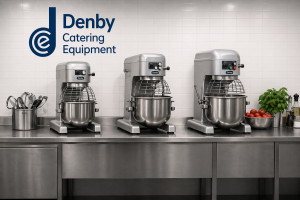
Mixer size is usually determined by batch size and frequency of use. It’s important to allow for peak demand rather than average usage to avoid overloading the machine and potentially reducing its lifespan.
Commercial food prep equipment typically includes safety guards, interlocks and stable construction. These features are essential to protect users and should always be considered when selecting equipment.
Looking for our other products? Click here